Swearing under my breath I ran back to the apartment from the truck. I was already running late, but there weren't any better options. The present had slid off the seat and torn the wrapping paper. Certainly Festus wouldn't mind, but I would. I grabbed the tape from the dining room table, locked the door on my way out, and ran back to the truck. I pulled my phone from my pocket and sent a text informing Ms Scarlet that I would be late.
A little better than twenty minutes later I was standing on Ms Scarlet and Prof Plum's front porch. The wrapping paper had been easily repaired. Ms Scarlet greeted me with a hug. Instead of the usual upbeat greeting we normally exchange this one was tinged with concern.
"How are you doing?" she asked. The tone of her voice and non-verbal communication made it clear what she meant. It was the kind of inquiring you hear in a hospital waiting room. There's no condemnation, judgement, or expectation in it. Instead there was concern and love.
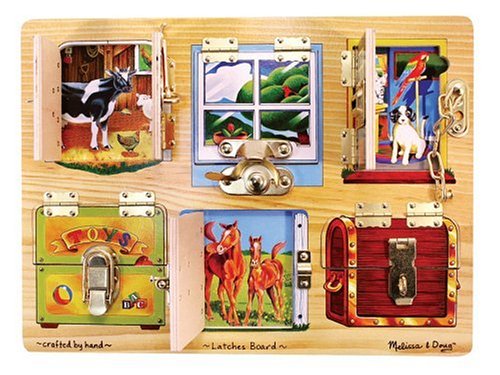
We quickly moved on to having our evening. Highlights included Festus trading off between chasing and being chased by every adult in the house. His refrain became "we should run as fast as we can". We continued to play and chat. Before dinner Festus opened his belated Christmas present. It was a hit. As the evening wore on Festus was alternately sweet and surly. No one was particularly surprised by this and everyone handled it well. Despite his occasional surly grunting or silence, there was still an important development in my relationship with my son that night.
When we were playing he made an unusual choice in sentence construction that only a young child would think to do. He talked about being chased by "my mommy". He said he should be picked up by "my daddy". He laughed when proclaiming he was going to "get my *******". My name became a title. More importantly I became someone he chose to claim as his own. It was clear and distinct. He knows my name because he knows and wants me.
After Festus went to bed the real conversation began. I had sent Ms Scarlet and Prof Plum an e-mail explaining the barest facts of what had been going on in my life. Chief among those are the split with Athena and her desire to pull back from seeing Festus. This visit was the first time the three of us had seen each other since November. There was a lot of ground to cover. We glossed over the broader topics, which left time and energy for the real issues at hand - our relationships. We talked about my relationship with Athena, their relationship with her and her family, my relationship with her family, and how all of this related to the little boy who was asleep upstairs. Initially I was nervous. I didn't know what to expect which always puts me on edge. As the conversation deepened so did my comfort. When the conversation was wrapping up I realized how much I valued the two people I'd just spent my Sunday evening with.
Beyond my relationship with Festus I appreciate having Prof Plum and Ms Scarlet in my life. It's great to have a friendship with two people who are so, well, adult in their relationships. They're responsible, well adjusted, grounded individuals with good heads on their shoulders. It's strange to understand that I had to be reminded of that. They bring the qualities that make them good parents to their friendships and family relationships too. The reasons I felt they would be excellent parents for Festus are the same reasons I like to spend time with them.
I'm glad I was reminded that I don't visit just to see Festus. I visit to see my family members that live in that household, all three of them.
Showing posts with label Relationship. Show all posts
Showing posts with label Relationship. Show all posts
Tuesday, January 22, 2013

Tuesday, January 15, 2013
The Reduced Version
I've made several attempts to write about what has been going on in my life of late. I haven't been able to finish any of them. Frankly it's just too hard to get through everything in one go. Instead I'll lay out the bare facts here and now. I can then process each part as necessary in the coming days, weeks, and months.
Last week Athena ended our relationship. This came just a few weeks after she told me she wasn't sure if she wanted to have any further contact with our son. Needless to say both of these situations are very difficult for me to handle. Forewarning: please don't post any comments about Athena's short comings, perceived or otherwise.
I am still unemployed. This is the longest I have been without a job since I began working. In fact I have never been without work since I began working a steady job when I was 21.
I will visit Festus on the 20th. We haven't seen one another since November. It's difficult to imagine facing him now. I feel like I've failed him. There isn't much I can offer him or myself right now. I've been putting one foot in front of the other for so long that I must take it on faith that I have faith at all. In six short months my life has crumbled to pieces.
Athena and I had been together for nearly five years. Four of those we spent living together. I miss that time we spent together. Hopefully things will get better.
But to be honest, I'm sick to death of hope.
Last week Athena ended our relationship. This came just a few weeks after she told me she wasn't sure if she wanted to have any further contact with our son. Needless to say both of these situations are very difficult for me to handle. Forewarning: please don't post any comments about Athena's short comings, perceived or otherwise.
I am still unemployed. This is the longest I have been without a job since I began working. In fact I have never been without work since I began working a steady job when I was 21.
I will visit Festus on the 20th. We haven't seen one another since November. It's difficult to imagine facing him now. I feel like I've failed him. There isn't much I can offer him or myself right now. I've been putting one foot in front of the other for so long that I must take it on faith that I have faith at all. In six short months my life has crumbled to pieces.
Athena and I had been together for nearly five years. Four of those we spent living together. I miss that time we spent together. Hopefully things will get better.
But to be honest, I'm sick to death of hope.
Saturday, June 16, 2012
Open Adoption Roundtable #39: Fathers' Day
The Open Adoption Roundtable
is a series of occasional writing prompts about open adoption. It’s
designed to showcase of the diversity of thought and experience in the
open adoption community. You don’t need to be listed at Open Adoption Bloggers
to participate or even be in a traditional open adoption. If you’re
thinking about openness in adoption, you have a place at the table. The
prompts are meant to be starting points–please feel free to adapt or
expand on them.
Write to someone else in the adoption constellation (someone specific or a general group). What do you want to say to them on Father’s Day?
To my Father,
I have much to be thankful to you for. But this Fathers' Day my thoughts on our relationship are melancholy. I wish you could see me as the man I am today. There is little I want more than for our relationship to be vital and current, both in the events of our lives and in our development as men. I wish you could respect me as a father.
The choice I made with Athena to place our son with another family was difficult for you. I know that to be true because it was difficult for everyone. All adoptions are difficult. But that's the only reason I know it was hard for you. You never told me how you felt, never shared your experience. It felt like you withdrew because of our decision and the way we went about it. I know we placed you in a precarious position. I'm sorry for that. But I also know how I felt. I was angry, sad, and felt very alone. Through out the course of the adoption process my family was not my ally. Still, nearly three years later, we don't talk about it.
I wish you would ask how your first grandson is. He's talking, running, developing a mile a minute, and he doesn't know you. I wish I could show you all the pictures I take of him and all the pictures Ms Scarlet sends me. But either it is too uncomfortable to look at, or you truly don't care. I wish my son could have you as a grandfather. When you play and coo over my nephew, just months younger than my son, I see what a great grandfather you are. I want that for Festus. I want that for myself. I want to feel that I'm still your son. I want to feel that either of us is important enough to seek, to call after, to pursue a real relationship with.
I wish you could see that I am a father. I wish you didn't pretend my son died. Though I'm not a father to him the way you were to me, he is my son.
Happy Fathers' Day dad.
I hope next year, we can both celebrate.
Tuesday, February 21, 2012
Weird; Like Normal
For a long time I wondered if something was wrong in our relationship. Was I trying too hard? That explanation seemed very unlikely. Perhaps I wasn't trying hard enough? Why didn't this seem to be going the way I had been told to expect?
I needed to stop measuring by other people's standards and recognizing the good thing in front of me. I had heard about and read so many people describing their relationships with adoptive families I lost focus. So often the description "like my sister" came up, shortly followed by tales of "countless texts back and forth" I started to think that might be "normal".
For a brief time I actually felt a little ashamed that my relationship with Ms Scarlet and Prof Plum didn't resemble those stories. I wanted our relationship to be like a beacon for how good everything can be in an adoption. I wanted to be the wildly successful anecdote people share, secretly hoping the same can happen to them, like when discussing film stars and rock gods. I looked at the markers for that quality relationship and found many of them lacking.
Instead, I found a real relationship. I found the kind of relationship that expresses, and more importantly respects, the strangeness of how our relationship came to be. Let's face it, adoption is a pretty strange way to kick off a friendship. "Hey, here's a kid, let's be friends!" It doesn't exactly fly in most social circles. So instead, I decided to let this relationship be exactly what it is; It's a little weird in that it's completely unique.
We don't get together and hang out at the park just because. We don't send each other endless text messages about our day at work, or the film we just saw. We don't gab like old friends who have known each other forever, because we haven't.
Instead, when we meet (about once every month) everyone is clearly aware of why we're together:
I needed to stop measuring by other people's standards and recognizing the good thing in front of me. I had heard about and read so many people describing their relationships with adoptive families I lost focus. So often the description "like my sister" came up, shortly followed by tales of "countless texts back and forth" I started to think that might be "normal".
For a brief time I actually felt a little ashamed that my relationship with Ms Scarlet and Prof Plum didn't resemble those stories. I wanted our relationship to be like a beacon for how good everything can be in an adoption. I wanted to be the wildly successful anecdote people share, secretly hoping the same can happen to them, like when discussing film stars and rock gods. I looked at the markers for that quality relationship and found many of them lacking.
Instead, I found a real relationship. I found the kind of relationship that expresses, and more importantly respects, the strangeness of how our relationship came to be. Let's face it, adoption is a pretty strange way to kick off a friendship. "Hey, here's a kid, let's be friends!" It doesn't exactly fly in most social circles. So instead, I decided to let this relationship be exactly what it is; It's a little weird in that it's completely unique.
We don't get together and hang out at the park just because. We don't send each other endless text messages about our day at work, or the film we just saw. We don't gab like old friends who have known each other forever, because we haven't.
Instead, when we meet (about once every month) everyone is clearly aware of why we're together:
Our Son
Don't get me wrong. I really like Ms Scarlet and Prof Plum. They're great people, and I always enjoy the time we spend together. We have very little in common in terms of factual experience, but we have a great deal in common with regard to temperament. We tend to think and behave similarly, even though our contexts are quite different. But then that's the wonderful thing about this family we've built; we like and are alike, even though we differ.
Our relationship with each other is icing. The cake is everyone's relationship with Festus. That is what makes me feel that this is something to be truly proud of. Our adoption is truly and completely centered on him. Without him Athena and I probably wouldn't have a relationship with Prof Plum or Ms Scarlet. And that's fine. Our relationship is a little weird. It is awkward to explain, but is becoming very natural to those that are in it. We are not like family in the SitCom sense, nor the story book way. We are not like long lost siblings who gab and joke all day. Our relationship runs deep, and quiet. Our relationship is our shared son. We all know it, and we don't need it to be anything else.
The laughter and fun we share, when it happens, is icing. Our son is the cake.
Friday, February 10, 2012
A brief visit from Reality
Several times over the past couple of months I've had the chance to visit, talk, laugh, and play with my son.
Each of the visits has been significantly different from the others. One visit included Athena and her nuclear family (mom, dad, and brother). One was just Athena and me. The visit right before Christmas was a special one. It was just me, Prof Plum, Ms Scarlet, and little Festus. Athena was buried under school work at the time and couldn't shake free any time during the crunch of final's week.
I was disappointed she couldn't join me, but as soon as Festus waved "hello" as I entered the kitchen that disappeared. There was a lot of conversation, both between the adults and with Festus. He had just gotten a substantially bigger vocabulary and was all too happy to show it off. Though, at two and a half, it still takes some work to understand what he's saying. Doubly so when he zigs into Spanish and zags back into English mid-thought. All those years studying Latin are showing their worth.
But the real joy of that visit came near the end. We had already eaten and were winding down. I sat on the floor in the living room, knowing that Festus was soon to enjoy his bedtime stories. To my surprise he picked up a book, walked straight toward me, turned, and sat in my lap. He held up the book cuing me to take it from him. Ms Scarlet asked "do you want him to read you your bedtime story?" Again, to my surprise and delight he replied with a clearly audible "yes".
That was the first time my son clearly and demonstrably chose me to do something with him. I had butterflies. My heart leapt to my throat. The only time I can remember that kind of giddy feeling, the disbelief at the joy I encountered, was when I met Athena. In that moment, all doubt that my son knows and loves me disappeared.
That's something I don't talk about much, but it had been a lingering worry. Did my son actually recognize me? Was he starting to know who I am, or see me as someone important, or at least worthwhile? Silly questions to ask of a relationship with a toddler, perhaps, but they were asked nonetheless. And they were answered;
"yes".
Each of the visits has been significantly different from the others. One visit included Athena and her nuclear family (mom, dad, and brother). One was just Athena and me. The visit right before Christmas was a special one. It was just me, Prof Plum, Ms Scarlet, and little Festus. Athena was buried under school work at the time and couldn't shake free any time during the crunch of final's week.
I was disappointed she couldn't join me, but as soon as Festus waved "hello" as I entered the kitchen that disappeared. There was a lot of conversation, both between the adults and with Festus. He had just gotten a substantially bigger vocabulary and was all too happy to show it off. Though, at two and a half, it still takes some work to understand what he's saying. Doubly so when he zigs into Spanish and zags back into English mid-thought. All those years studying Latin are showing their worth.
But the real joy of that visit came near the end. We had already eaten and were winding down. I sat on the floor in the living room, knowing that Festus was soon to enjoy his bedtime stories. To my surprise he picked up a book, walked straight toward me, turned, and sat in my lap. He held up the book cuing me to take it from him. Ms Scarlet asked "do you want him to read you your bedtime story?" Again, to my surprise and delight he replied with a clearly audible "yes".
That was the first time my son clearly and demonstrably chose me to do something with him. I had butterflies. My heart leapt to my throat. The only time I can remember that kind of giddy feeling, the disbelief at the joy I encountered, was when I met Athena. In that moment, all doubt that my son knows and loves me disappeared.
That's something I don't talk about much, but it had been a lingering worry. Did my son actually recognize me? Was he starting to know who I am, or see me as someone important, or at least worthwhile? Silly questions to ask of a relationship with a toddler, perhaps, but they were asked nonetheless. And they were answered;
"yes".
Friday, November 11, 2011
Balancing the Personal Checkbook
"How many of us actually live for peace? May we have a show of hands?"
~Victor Wooten
The quote above helps me be mindful of the potential discord between my stated priorities, my actions, and my thought patterns. Essentially I reinterpret the question to mean "am I living as one?" The focus on integrity this brings forward lends me a clearer mind to assess myself and my life. A key component I've been reviewing lately is my personal quality, especially in relationships.
What do I actually bring to the table in a relationship? For that matter, what can anyone bring to bear in a relationship? At first blush most people believe they are high quality material for friendship. Few people will self describe as a crappy, selfish, duplicitous, or obnoxious friend. Yet we all have encountered people who we experience as being crappy, selfish, duplicitous, and obnoxious friends. My suspicion is these traits come to the fore when there is a schism between how we think, what we want, how we think we can get it, and the reality we are in. That's why I think it's important to engage in ruthlessly honest self evaluation. If my priorities and my behavior don't agree with one another I'm duplicitous. If I want to be the center of attention, the life of the party, but don't have the polished social skills to successfully navigate that experience, I'm obnoxious. If I'm dissatisfied with a relationship but unwilling to end it or put in the effort to change it, I'm both duplicitous and selfish.
But then we take a look at the positives. What can we bring to a relationship that is good? As best I can tell the big three are compassion, integrity, and resources. We put energy into relationships that are important to us. We care for the people in those relationships and want them to feel happy. Internal/External harmony helps us direct our care and energy outward to the vital relationships in our lives.
What happens when one of those aspects is missing? What does is mean for a person's relationships if s/he is compassionate, sharing of resources, but dishonest? That person may be described as a lovely human, but is not trustworthy and therefore not dependable. The person with resources to share and integrity may very well ignore the needs of those around them. For want of compassion that person would likely be described as cold hearted, or at least distant. And now we come to the real rub, and the reason this was worth writing about at all on a blog about adoption:
Compassion and integrity without resources. What good are compassion and integrity if the person in question hasn't the resources necessary to effect change in the lives around him/her? Is harmony with impotence, care with utter exhaustion, worth offering? This is just one of the questions birth parents everywhere ask themselves. It's an important question to ask, and one I think more people should address. It has far reaching implications. But before anyone says the resources are necessary for worth, like a car engine needs gasoline, think about how severely segmented the population is in terms of financial, emotional, relational, spiritual, and time resources. But, before anyone says love is all you need, think about the emotional toll taken on a person trying to support another who doesn't have enough resources to care for him/herself, let alone invest in a relationship. Children struggle with this all the time when caring for elderly family members who cannot care for themselves. Is it right to start that struggle when the child is fifteen? What about nine? Or four?
There is no clear cut answer here. Every person's situation is different. But I think a hard look at what we really have, and what we truly lack, may significantly change the way we relate to one another.
Monday, July 25, 2011
On Why I Disappear
a·so·cial
/eɪˈsoʊʃəl/ [ey-soh-shuhl]
–adjective/eɪˈsoʊʃəl/ [ey-soh-shuhl]
1. not sociable or gregarious; withdrawn from society.
2. indifferent to or averse to conforming to conventional standards of behavior.
3. inconsiderate of others; selfish; egocentric.
*my proof reader is MIA. Please forgive anything that doesn't make sense*
Last night I went to dinner with a cousin I've not seen in five or six years, along with my eldest brother (I'm the youngest of three) and Athena. During the conversation we had while walking to the restaurant my cousin asked me to define the difference between asocial and antisocial. For my money the good folks at dictionary.com pretty much nailed it. I would, however, assert that the tertiary definition for asocial befits antisocial more aptly. But, with that small aside, it seems a fitting banner to fly as my colours.
This is a question I field with some regularity. I'm rather accustomed addressing the discrepancies between indifference and intolerance. Indifference and aggression are opposed forces. Love and hate, on a continuum of passion, are on the same end of the spectrum. Indifference, dispassion, and lack of interest are on the opposite.
Why am I asked about this and why am I bothering to tell you? Because I self identify as asocial. I am largely indifferent to the social mores and conventions that make up the minutia of daily interaction. I find them to be irrelevant to the quality of my relationships. More importantly, however, is the notion conveyed in definition #1 above - withdrawal from society. I am pretty withdrawn. I have a few good friends. I can make conversation and often do so to set others at ease around me. Why bother if I disregard conventional social protocols I as claim? Because it makes my life easier. Things go better when people like me. It's the same reason that sociopaths can choose to function in society without constantly breaking laws and crushing the dreams of those around them. Because, in the long run, it's easier that way. More grease for the gears to get what you want. So this begs the question "what does 'I am' want?"
More or less to be left alone with the few high quality relationships I have. Most people are unaware of the fact that the best way to be left alone is to be the one to make contact first. There is an expectation, are here at least, that the person to engage is also the person who must disengage. If I bump into a neigher and they greet me, opening with small talk, and I disengage from that interaction before they do I'm probably going to be viewed as antisocial or some version of jerk. If I initiate the exchange then excuse myself (as if that phrase weren't telling enough) to leave, I'll likely be seen as a friendly chap who happened to be needed elsewhere. I recognize the mores and regulations. I just don't like them. The key is learning which ones to use that allow you to run roughshod over dozens of others.
But all of this is irrelevant without intention. Why withdraw? What's the real point? Many assume I must be a pretty angry person who hates humanity. Others believe I'm poorly socialized and uncomfortable around new people. Most people think I "just need to loosen up" (this falls into the 'if you'd just be more like me it would be great, because then you'd be like me" camp). All of these ideas are off the mark. The reason I withdraw and minimize the breadth of contact is simple and pretty obvious for those who know me.
People make me sad.
When I speak with people and see the habits formed, the coping mechanisms they're flogging themselves with, I become both frustrated and sad. People are better than this. Basic tenants - integrated self is better than a compartmentalized self, seeking inner quite is more nurturing than insatiable lust for intensity, skilled thinking results in more effective problem solving than raw emotion - seem to be largely ignored or forgotten. I want better than that for the people I meet. I want them to be well and joyful. I want them to be unshakable and compassionate. I know they can be, but the potential seems dormant so often.
I feel compassion for humanity. I genuinely do. That is precisely why I pull back. By my nature I am a very sensitive person. Like many other sensitive people that applies not only to my emotional spectrum but also to sensory data (which could be another post entirely). Like being overloaded by the advertisements, noise, and smells of Time Square, so too does a party full of people scream and throb emotionally. The empathetic weight of each person added together becomes too much to bear. There are a couple options for how to deal with this.
The first is to "put on blinders", effectively to filter what information you respond to. That's a necessary skill to develop, but it has a downside. Filtering is a useful skill to have for making unexpected situations tolerable. Filtering of compassion, however, means deeming some people "human" and others "less human". I can't divorce experiencing empathy for some people and not others as a value judgment. For my taste judging whether or not a person is human enough to merit compassion isn't a practice I'm willing to take up. In my life compassion is an expression of respect and I'm even less willing to make a habit of regularly disrespecting people.
The second option is to minimize stimulation. If Time Square is overwhelming don't be there. If parties are depressing, stop going. Try having a cup of tea or a beer with a friend instead. The key is matching environment to temperament. The first step to avoid fatigue is to reduce demand. By withdrawing I don't have to compromise my ethic related to compassion/respect and I avert compassion fatigue (see also). There are a limited number of times per week I can say "it's about respect" and "every relationship is individual and must be treated as such" before I get exhausted and depressed. So I stop putting myself in situations where it is likely to come up. Blog-land is a big draw on my resources. I get a lot out of it but there are times when life in my immediate surroundings asks too much for me to stay engaged here. That's why I disappear.
I don't want this to end on a down note, so let me make it clear that I'm sticking around. I just wanted to take this moment to explain my hot/cold relationship with posting new content. The other reason I'm posting this diatribe, and why I believe it belongs in the consciousness of the Open Adoption community, is because socialization, compassion, respect, and cyclic communication are all issues front and center in every open adoption whether we realize it or not. Open adoptions are about relationships. Specifically I think it's important to note that there are varying degrees of sensitivity to emotional trauma (inherent in an adoption) and habits of communication. For those of you who don't quite get what I mean when I'm talking about sensitivity let me give you an illustration:
Imagine every human being is a microphone. Each microphone has a different degree of sensitivity to sound. Put eight mics around a table and drop a pin, listen to the playback, and there are eight different volumes (this is referred to as "gain" in music circles). So each mic is receiving the same sound but experiences that sound at a different volume. A microphone that has very high gain is best suited to very quiet environments where it can pick up on the sounds of breath, insects crawling, or a low whisper. A microphone with low gain will be better suited to being onstage at a rock concert. If you take the high gain mic to the rock concert it will feedback, "clip", distort the sound, and be damaged.
In a very real way, to the highly sensitive person, everyone around her/him is yelling at all times. It is deafening. But unlike hearing damage emotional sensitivity never attenuates to the new level. It is the same deafening pain every time.
If any of this resonates (please pardon the pun) with you, or think you may know someone for whom this may be true please know there are resources available. There are two books linked at the bottom; one that has been invaluable for me as I learn to respect and care for myself as a sensitive person. The other gives valuable insight to other styles of communication and cognitive function. Very helpful when trying to navigate what can seem a world of people who "don't get it." Also consider reading more about compassion fatigue and understanding how to care for those that care for you. Thanks for sticking with me. This is a tricky subject and one rarely brought up.
Be gentle with each other out there. It can be a tough world.
Friday, April 22, 2011
Hind Sight Projection
Nothing for months, then two in one day? Shocking, I know. Sometimes there are things more important than eating at lunch. Rarely, but sometimes true.
It's often tempting to try to understand another person's experiences by superimposing our own emotional realities as a template over the factual events in the other person's life. It's a pretty functional model for how children first begin developing sympathy. I've written about it before but it merits a quick refresher before moving on to today's subject. Effectively;
In a situation like X, I thought and felt Y. Person 1, therefore, most likely also feels Y when in a situation similar to X.
Most people do this and many never develop cognitive/emotional integration beyond this point. That's unfortunate as this model only works when there is a truly analogous connection between the experiences. Often there is not. This is particularly true in the sphere of adoption. The experiences of the birthfamily, adoptive family, and the adoptee (the traditional view of the "Triad" in adoption) are connected. However in terms of discrete experiences they are very different. Among the commonalities are loss, isolation, ambivalence, anger, and fear. The thought processes that drive these emotional experiences, however, diverge significantly. It is important to recognize the difference between similar emotions and understanding the full depth of the experience related to it. If we get too stuck on the idea of really understanding everyone we actually disrespect the people we are trying to become closer to. All too often a person's experience is simplified in order to fit our schema, our understanding and intimacy becomes forced rather than resonant, and the person's emotions are disregarded where they disagree with our own. That's the nature of the beast with the type of sympathy response illustrated above. Most often there's no malice involved and ulterior motives don't enter the equation. The same method is, however, sometimes used as a tactic intentionally when one is trying to have a more emotionally intimate relationship than the other participant wishes to offer. In cases where this is intentional it is unacceptable. Pushing for intimacy isn't a viable route for a healthy relationship. Were we to shift gears from emotional intimacy to physical intimacy the reason becomes exceedingly clear. At best, pushing for physical intimacy when the other person doesn't want it makes one a serious jerk, and at worst a rapist.
It's okay to ask for more intimacy in a relationship. That's how many good relationships continue to grow. One person asks for more intimacy to deepen the connection of the relationship. The other person agrees and may behave, or "open up", in ways that are uncomfortable but consensual. A relationship where each person takes on the role of calling the other to deeper intimacy is a real winner. Each person grows in the relationship and step by step the relationship becomes more robust. Begging, needing, forcing, or pushing for intimacy typically means one person is doing too much work, and that expectations need to be adjusted. It's possible the relationship in question is quite healthy. It's equally possible everyone in the relationship is quite healthy. Somewhere, however, there is(are) an expectation(s) that corresponds to an internal emotional reality that is not a reflection of the relationship in question.
It is quite possible that the relationship needn't change or be addressed. Very often to find satisfaction in a relationship what we need do is redefine the terms of satisfaction. It's the relationship equivalent of training oneself out of needing what one wants, and instead wanting what one has.
It's often tempting to try to understand another person's experiences by superimposing our own emotional realities as a template over the factual events in the other person's life. It's a pretty functional model for how children first begin developing sympathy. I've written about it before but it merits a quick refresher before moving on to today's subject. Effectively;
In a situation like X, I thought and felt Y. Person 1, therefore, most likely also feels Y when in a situation similar to X.
Most people do this and many never develop cognitive/emotional integration beyond this point. That's unfortunate as this model only works when there is a truly analogous connection between the experiences. Often there is not. This is particularly true in the sphere of adoption. The experiences of the birthfamily, adoptive family, and the adoptee (the traditional view of the "Triad" in adoption) are connected. However in terms of discrete experiences they are very different. Among the commonalities are loss, isolation, ambivalence, anger, and fear. The thought processes that drive these emotional experiences, however, diverge significantly. It is important to recognize the difference between similar emotions and understanding the full depth of the experience related to it. If we get too stuck on the idea of really understanding everyone we actually disrespect the people we are trying to become closer to. All too often a person's experience is simplified in order to fit our schema, our understanding and intimacy becomes forced rather than resonant, and the person's emotions are disregarded where they disagree with our own. That's the nature of the beast with the type of sympathy response illustrated above. Most often there's no malice involved and ulterior motives don't enter the equation. The same method is, however, sometimes used as a tactic intentionally when one is trying to have a more emotionally intimate relationship than the other participant wishes to offer. In cases where this is intentional it is unacceptable. Pushing for intimacy isn't a viable route for a healthy relationship. Were we to shift gears from emotional intimacy to physical intimacy the reason becomes exceedingly clear. At best, pushing for physical intimacy when the other person doesn't want it makes one a serious jerk, and at worst a rapist.
It's okay to ask for more intimacy in a relationship. That's how many good relationships continue to grow. One person asks for more intimacy to deepen the connection of the relationship. The other person agrees and may behave, or "open up", in ways that are uncomfortable but consensual. A relationship where each person takes on the role of calling the other to deeper intimacy is a real winner. Each person grows in the relationship and step by step the relationship becomes more robust. Begging, needing, forcing, or pushing for intimacy typically means one person is doing too much work, and that expectations need to be adjusted. It's possible the relationship in question is quite healthy. It's equally possible everyone in the relationship is quite healthy. Somewhere, however, there is(are) an expectation(s) that corresponds to an internal emotional reality that is not a reflection of the relationship in question.
It is quite possible that the relationship needn't change or be addressed. Very often to find satisfaction in a relationship what we need do is redefine the terms of satisfaction. It's the relationship equivalent of training oneself out of needing what one wants, and instead wanting what one has.
Subscribe to:
Posts (Atom)